Address
304 North Cardinal
St. Dorchester Center, MA 02124
Work Hours
Monday to Friday: 7AM - 7PM
Weekend: 10AM - 5PM
Address
304 North Cardinal
St. Dorchester Center, MA 02124
Work Hours
Monday to Friday: 7AM - 7PM
Weekend: 10AM - 5PM

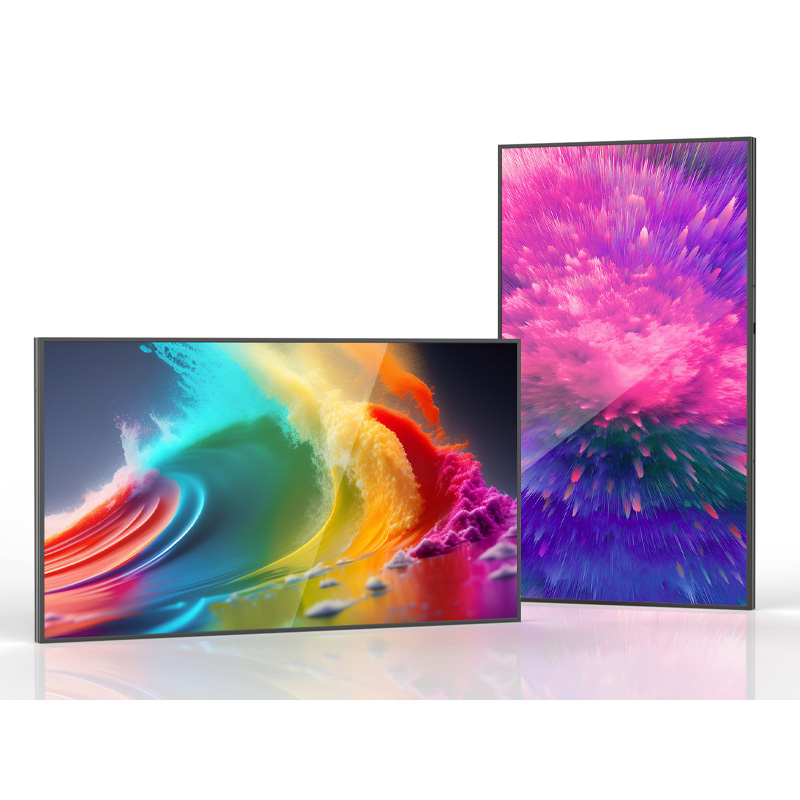
In today’s rapidly accelerating digital wave, the commercial display industry is undergoing unprecedented transformation. From traditional advertising to immersive experiences, from one-way displays to multi-dimensional interactions, and from standardized products to scenario-based solutions—commercial display equipment is no longer just a “tool for displaying content,” but a crucial foundation for brand communication, digital operations, and offline digital transformation.
With the development of technologies such as 5G, AI, and IoT, industries like smart retail, smart office, smart tourism, and smart healthcare are constantly upgrading, and display terminals are taking on increasingly more functions. For commercial display companies, seizing this trend is key to sustained growth over the next 5 to 10 years.
01 Scenario-Based Design Becomes a Decisive Competitive Advantage
In the past, many commercial display products emphasized indicators such as “parameters,” “resolution,” and “brightness,” but the market is changing. More and more customers are no longer just asking “How clear is your screen?” but rather:
Can it be adapted to my store’s style?
Does it have a content management system?
Can it achieve real-time interaction?
How can I improve customer conversion rates?
This means the commercial display industry is shifting from “product competition” to “scenario value competition.”
For example:
In the retail sector, screens need to be integrated with store design and linked with membership and POS systems to enable dynamic content delivery;
In conference settings, equipment must support wireless projection, multi-device collaboration, and seamless integration with remote conferencing platforms;
In cultural and tourism exhibition halls, commercial display equipment needs to combine audio systems, lighting systems, and interactive technologies to create immersive spaces.
Companies capable of providing comprehensive solutions for different application scenarios will gain an advantage in the new round of competition.
02 Technological Innovation Drives Accelerated Industry Advancement
In recent years, commercial display equipment has continued to evolve in several directions, including:
Ultra-narrow bezel splicing technology for more seamless displays
Fully laminated touch controls improve accuracy and clarity
Mini-LED and Micro-LED drive high-end display upgrades
Ultra-high brightness outdoor displays adapt to all-weather environments
Intelligent content management systems (CMS) improve content delivery efficiency
Modular design simplifies installation and maintenance
These technologies not only improve display effects, but more importantly—they become the “infrastructure” for enterprise digital operations.
A display system capable of independent multi-area split-screen operation, unified multi-terminal management, and cloud-based updates will significantly improve brand communication efficiency, thereby generating truly quantifiable value for customers.
03 Upgraded Customer Needs: More Stable, Smarter, and More Aesthetically Pleasing
Currently, end-customers’ core demands for commercial display products focus on three points:
Whoever continuously invests in these three aspects will build a long-term competitive advantage.
04 The Long-Term Value of Commercial Display Companies: More Than Just Equipment, It’s About Comprehensive Services
As the market matures, customers increasingly expect suppliers to provide end-to-end services, from solution planning and equipment customization to construction and installation, content creation, and after-sales maintenance.
The core of the future commercial display industry will no longer be “selling products,” but rather:
Selling solutions
Selling experience
Selling stability
Selling long-term value
Companies that can deliver “high-quality products + fast delivery + excellent after-sales service” will stand out in the industry.
Conclusion
The commercial display industry is moving towards a more intelligent, integrated, and scenario-based future. Those who understand industry trends, accurately grasp customer needs, and consistently maintain stable quality and innovation capabilities will lead the way in this new competition.
For rapidly growing companies, this is both a challenge and a tremendous opportunity brought by the times.
